 We tend to hear a lot about software industry success stories. But most of us mere mortals have to fail a few times before we learn enough to succeed. In this guest post William Echlin talks about the hard lessons he has learned about creating and selling software products.
Probably, like you, I started developing my own software application a few years back. I had this dream of working for myself and becoming financially independent. The money side was a nice goal to have but ultimately I was looking for the fulfilment of working for myself. Sound familiar? Well, if it does, you may have learnt many of the lessons I’ve learnt. I don’t mind admitting now that I got carried away. I got carried away with building a test management application to the extent that I forget about many of the key things you need in place to build a successful business.
After a few years work I’d created the leading open source test management application (a product called QaTraq that’s still available on Source Forge but a little dormant). It had cost me time, money and effort. I’d achieved some success with building and marketing a free product. Next stop taking it commercial. This is where it gets brutal.
About a year into leaving a full time job I’m taking the last £1,000 out of the joint bank account. I’m making some sales but it’s damn tough. A few months later and I’m in the supermarket £15,000 in debt wondering if my credit card is about to be rejected for the families weekly shop. You read about this sort of thing in biographies on successful entrepreneurs. These guys take it to the limit and then succeed and make millions. Sounds so glamorous. When your wife, 3 year old son and 1 year old daughter depend on that credit card being accepted believe me it’s NOT glamorous.
Building a business has always been about balancing design, development, sales, marketing, support, testing, etc. When you’re a one man band that’s not easy. You try to do everything. You’re bloody brilliant at building the product. The trouble is, once you want to make a living out of it, that “building” is almost the least important bit. After I’d spent 5 years building my product I stumbled upon one very useful piece of advice. It was a little late for me but maybe it’ll help you….
“Learn how to market and sell before you build your product. Learn these crafts by picking a product that’s already been built and act as a reseller”.
That’s worth reading again (it’s counter intuitive). What’s being said here is that if you can’t market and sell a product (ANY product) then the odds of succeeding with your own product are slim. If you can’t “market and sell” what on earth is the point in wasting all that time, effort and money building your own product? If you’re never going to be able to market it, and sell it, why build it?
So find a product in a slightly different sector and sign up as a reseller. Save yourself the time and effort of building a product and practice marketing and sales with someone else’s product first. Create a web site, develop an ad words campaign and start promoting with social media. Sell the product! If you can’t get the hang of this why bother building your own? If you can get the hang of building your own marketing machine it won’t be wasted effort. If you’re clever and pick the right product / sector you just need to switch the product on your site a year or so down the road. Once you’ve built the marketing and sales engine switch it to sell the product you’re building.
I’m not saying that this is the only way to go about it. I’m just saying that if you don’t have the determination to learn, understand and be successful with marketing and sales early on, then it’s unlikely you’ll succeed with your own product. So why waste time building it. It’s a tough lesson to learn. One I learnt the hard way.
And the specific lessons I learnt the hard way? Well I’d do these things first if I was ever to do this again:
1. Create at least one lead generation channel as an affiliate for another product. That lead generation channel will probably be a web site and as part of that you’ll need to master things like:
- Google Adwords
- Social media
- Email marketing
- Blogging
- Link building
All these things take a lot of time. Do you have the determination to learn and execute on all of this?
2. Spend some time in a sales related role. Initially I was working in a full time job whilst building my own product in my spare time. The best thing I did was offer to help the sales team with product demos. I learnt lots from working closely with sales people (I didn’t like them very much, but that’s a different matter) and clients. If you can’t do product demos to clients, or you can’t talk to clients confidently then you don’t stand a chance of selling anything. People buy from people and a product demo is THE place to show case YOU (and the product)
3. Spend time learning about re-marketing. A lot of money goes into getting that initial lead. Don’t waste it! Understand Google’s re-marketing campaigns. These allow you to follow the people that came to your site and continue serving them banner ads on other sites. Understand email marketing once you’ve captured an email address. Yes I hate most of this when I’m on the receiving end. The reality is that it works though. That’s why companies do it (and why Google make so much money). I’ll tell you now that your business won’t survive if you don’t master some of these techniques. And if your business doesn’t survive then every ounce of effort you’ve put into building that application is wasted!
4. Spend time learning about cross selling. A significant amount of revenue can come from cross selling other products. When was the last time you went to a restaurant and they didn’t try to sell you a bread roll? When was the last time you flew somewhere and they didn’t try to sell you priority boarding? For you this might be in the guise of selling your leads to other companies that have complementary products. It might be providing different editions of your application. There are many other ways to add additional revenue streams to your prime product sale. These streams are absolutely critical to the success of your business.
5. Don’t try to become a sales person. You don’t have to be a sales man/woman to sell. Some of the best sales people I’ve worked with are those that just go out of their way to HELP the customer. They understand their niche inside out and have the gift, not to sell, but to HELP. People that are looking to buy something want help. They want an itch scratched or a problem solved. If you can help them with a solution then you’re most of the way towards making the sale. Forget all this rubbish about psychology and techniques to influence people. The best thing you can do is enter the mind set of helping! Go out of your way to help.
I don’t have all of this right by any stretch. I know one thing though. Products don’t sell themselves. And if you’re not prepared to start learning about sales and marketing you won’t sell your product.
It was all a bit ironic for me though. I spent years building my own test management product to help software testers. It even started out as the leading open source solution in it’s market for many years. I mastered SEO and created a great lead generation process (the oxygen of any business). I created a version which I put a price on and sold to companies. I even sold to a number of significant companies. But I just couldn’t do all of it. I couldn’t balance the design, development, testing, marketing, sales, support, etc. It’s brutally painful when this dawns on you.
In the end what I’d really mastered was lead generation. I ended up with a web site that attracted my target audience but failed to sell much. When you realise that, you realise that it’s the product. Nothing wrong with the marketing and sales. It’s the product. There were better products out there. Kind of tough to swallow but as soon as I did, I moved on. These leads, or rather people (because leads are actually real people), were looking for help. I just needed to provide them with the right product and services. So I started reselling other products and providing consultancy around those products on my test management website.
In the end I had one of the toughest bits right. If you get the lead generation right you’ve built a marketing foundation that you can build any type of business around. For me I just wished I figured the marketing piece out before I’d built my product. Now I just work on my marketing. Oh, and I help companies with their software testing and test management. For me at least, it’s much easier this way.
William Echlin has spent 20 years in testing, working on everything from air traffic control systems to anti-virus engines. He had a bad experience in his early childhood trying to effectively manage test cases with vi (he’s still a huge fan of vi but recognises that text files make a lousy repository for test cases). In an attempt to deal with these childhood demons he became a consultant on all things related to test management.

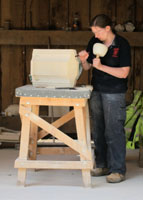 My grandfather worked most of his life as a stonemason. Much of that time was spent restoring the ruin of a Bishop’s palace in Sherborne. His work is still visible long after his death. The work of the stonemasons who built the palace is still visible after more than 8 centuries. How long after you stop programming is any of your work going to last? If it is a desktop app, I doubt anyone will have a working computer with an OS that can run it in 20 years. If it is a web app, it dies the day the hosting bill no longer gets paid. What are you going to show your grandchildren – some screenshots or faded printouts?
 Successful Software