Category Archives: marketing

Amazon PPC Ads

The ever-expanding Amazon empire is now offering their own Pay Per Click ads.

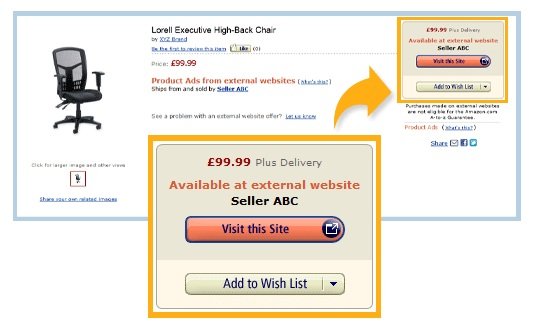
Amazon Product Ads is an advertising programme designed to provide Amazon.co.uk customers seamless access to products available on external Web sites. As a seller, you simply upload your catalogue of products you wish to advertise and set your cost-per-click bids and budget. Amazon will then display your ads to Amazon.co.uk customers when they shop for your product or related products. Customers who are interested in buying your product can click through to your Web site and purchase the product directly from you.

amazon-ad

As with Google Adwords, you bid for clicks. Minimum bid prices depend on the category of goods you want your ad to appear in. On amazon.co.uk the categories and minimum bid prices are currently:

amazon ad prices

There doesn’t seem to be any restrictions on advertising downloadable software. So it might be worth trying if you software fits into any of the above categories and has a relatively high ticket price (given that typical conversion rates are 1% there is no point paying £0.10 per click for software that you sell for £10). For example, if your software is related to music, you could advertise it alongside musical instruments. I would consider advertising my table planner software alongside books or DVDs related to wedding or event planning. Unfortunately that isn’t an option at present.

amazon ad categories not supported

I could try advertising my software in categories such as Kitchen&Home›wedding favours. But people looking for wedding favours aren’t explicitly searching for table planners, so the click to sale conversion ratio is likely to be well under 1%. Also the minimum bid price in this category is £0.15 and I am guessing that my ads wouldn’t even show if I bid the minimum. Paying >£0.15 per click with a <1% conversion rate for software priced at £19.95 doesn’t make sense. So I haven’t signed up.

It is inevitable that the bid price will inflate over time. So, if you want to try it, now is probably a good time. Amazon.co.uk are also offering £50 in free clicks if you sign up now. You can find out more on the Amazon Product Ads FAQ.

Have you tried Amazon PPC ads? If so, do you have to bid significantly above the minimum bid prices and how do the conversion rates compare with other PPC ads (such as Adwords)?

The declining profitability of Google Adwords

Google Adwords used to be a great way to get targeted traffic cheaply (if you knew what you were doing). I think those days are well and truly over.

I have been using Google Adwords to advertise my table plan software since 2005. The following graphs show some metrics from my Adwords campaigns over that 8 years. The graphs show 12-monthly cumulative figures (e.g. each point represents the value for that month plus the preceding 11 months). Using cumulative data hides some of the noise, including the seasonal variations that are inevitable in a business related to weddings (more people buy my software when it is summer in the northern hemisphere), and makes the overall trends clearer.

Average cost per click (CPC)

Average cost per click (CPC)

Clickthroughs

Clickthroughs

Conversions (sales)

Conversions (sales)

Profit per month

Profit per month

The trends are clear and it’s not a pretty picture. Less, more expensive clicks = less profit. I can either pay more and more per click to maintain the same number of sales. Or I can continue to pay the same per click and get less and less clicks. Either way, my profit goes down. It isn’t a trend I see changing direction any time soon.

I think these long-term trends are mostly due to increasing competition. As more and more companies bid on Adwords for a finite number of clicks, it inevitably drives up the cost of clicks (simple supply and demand). It also doesn’t help that a lot of Adwords users are not actively managing their campaigns or measuring their ROI, and are consequently bidding at unprofitably high levels. Google also does its best to drive up CPC values in various ways (suggesting ridiculously high default bids, goading you to bid more to get on page 1, not showing your ad at all if you bid too low – even if no other ads appear etc).

Of course, this is just my data for one product in one small market. But the law of shitty clickthrus predicts that all advertising mediums become less and less profitable over time. So I would be surprised if it isn’t a general trend. Are your Adwords campaigns becoming less profitable? Have you found another advertising medium that works better?

The brutal truth about marketing your software product

badwaterWe tend to hear a lot about software industry success stories. But most of us mere mortals have to fail a few times before we learn enough to succeed. In this guest post William Echlin talks about the hard lessons he has learned about creating and selling software products.

Probably, like you, I started developing my own software application a few years back. I had this dream of working for myself and becoming financially independent. The money side was a nice goal to have but ultimately I was looking for the fulfilment of working for myself. Sound familiar? Well, if it does, you may have learnt many of the lessons I’ve learnt. I don’t mind admitting now that I got carried away. I got carried away with building a test management application to the extent that I forget about many of the key things you need in place to build a successful business.

After a few years work I’d created the leading open source test management application (a product called QaTraq that’s still available on Source Forge but a little dormant). It had cost me time, money and effort. I’d achieved some success with building and marketing a free product. Next stop taking it commercial. This is where it gets brutal.

About a year into leaving a full time job I’m taking the last £1,000 out of the joint bank account. I’m making some sales but it’s damn tough. A few months later and I’m in the supermarket £15,000 in debt wondering if my credit card is about to be rejected for the families weekly shop. You read about this sort of thing in biographies on successful entrepreneurs. These guys take it to the limit and then succeed and make millions. Sounds so glamorous. When your wife, 3 year old son and 1 year old daughter depend on that credit card being accepted believe me it’s NOT glamorous.

Building a business has always been about balancing design, development, sales, marketing, support, testing, etc. When you’re a one man band that’s not easy. You try to do everything. You’re bloody brilliant at building the product. The trouble is, once you want to make a living out of it, that “building” is almost the least important bit. After I’d spent 5 years building my product I stumbled upon one very useful piece of advice. It was a little late for me but maybe it’ll help you….

“Learn how to market and sell before you build your product. Learn these crafts by picking a product that’s already been built and act as a reseller”.

That’s worth reading again (it’s counter intuitive). What’s being said here is that if you can’t market and sell a product (ANY product) then the odds of succeeding with your own product are slim. If you can’t “market and sell” what on earth is the point in wasting all that time, effort and money building your own product? If you’re never going to be able to market it, and sell it, why build it?

So find a product in a slightly different sector and sign up as a reseller. Save yourself the time and effort of building a product and practice marketing and sales with someone else’s product first. Create a web site, develop an ad words campaign and start promoting with social media. Sell the product! If you can’t get the hang of this why bother building your own? If you can get the hang of building your own marketing machine it won’t be wasted effort. If you’re clever and pick the right product / sector you just need to switch the product on your site a year or so down the road. Once you’ve built the marketing and sales engine switch it to sell the product you’re building.

I’m not saying that this is the only way to go about it. I’m just saying that if you don’t have the determination to learn, understand and be successful with marketing and sales early on, then it’s unlikely you’ll succeed with your own product. So why waste time building it. It’s a tough lesson to learn. One I learnt the hard way.

And the specific lessons I learnt the hard way? Well I’d do these things first if I was ever to do this again:

1. Create at least one lead generation channel as an affiliate for another product. That lead generation channel will probably be a web site and as part of that you’ll need to master things like:

  • Google Adwords
  • Social media
  • Email marketing
  • Blogging
  • Link building

All these things take a lot of time. Do you have the determination to learn and execute on all of this?

2. Spend some time in a sales related role. Initially I was working in a full time job whilst building my own product in my spare time. The best thing I did was offer to help the sales team with product demos. I learnt lots from working closely with sales people (I didn’t like them very much, but that’s a different matter) and clients. If you can’t do product demos to clients, or you can’t talk to clients confidently then you don’t stand a chance of selling anything. People buy from people and a product demo is THE place to show case YOU (and the product)

3. Spend time learning about re-marketing. A lot of money goes into getting that initial lead. Don’t waste it! Understand Google’s re-marketing campaigns. These allow you to follow the people that came to your site and continue serving them banner ads on other sites. Understand email marketing once you’ve captured an email address. Yes I hate most of this when I’m on the receiving end. The reality is that it works though. That’s why companies do it (and why Google make so much money). I’ll tell you now that your business won’t survive if you don’t master some of these techniques. And if your business doesn’t survive then every ounce of effort you’ve put into building that application is wasted!

4. Spend time learning about cross selling. A significant amount of revenue can come from cross selling other products. When was the last time you went to a restaurant and they didn’t try to sell you a bread roll? When was the last time you flew somewhere and they didn’t try to sell you priority boarding? For you this might be in the guise of selling your leads to other companies that have complementary products. It might be providing different editions of your application. There are many other ways to add additional revenue streams to your prime product sale. These streams are absolutely critical to the success of your business.

5. Don’t try to become a sales person. You don’t have to be a sales man/woman to sell. Some of the best sales people I’ve worked with are those that just go out of their way to HELP the customer. They understand their niche inside out and have the gift, not to sell, but to HELP. People that are looking to buy something want help. They want an itch scratched or a problem solved. If you can help them with a solution then you’re most of the way towards making the sale. Forget all this rubbish about psychology and techniques to influence people. The best thing you can do is enter the mind set of helping! Go out of your way to help.

I don’t have all of this right by any stretch. I know one thing though. Products don’t sell themselves. And if you’re not prepared to start learning about sales and marketing you won’t sell your product.

It was all a bit ironic for me though. I spent years building my own test management product to help software testers. It even started out as the leading open source solution in it’s market for many years. I mastered SEO and created a great lead generation process (the oxygen of any business). I created a version which I put a price on and sold to companies. I even sold to a number of significant companies. But I just couldn’t do all of it. I couldn’t balance the design, development, testing, marketing, sales, support, etc. It’s brutally painful when this dawns on you.

In the end what I’d really mastered was lead generation. I ended up with a web site that attracted my target audience but failed to sell much. When you realise that, you realise that it’s the product. Nothing wrong with the marketing and sales. It’s the product. There were better products out there. Kind of tough to swallow but as soon as I did, I moved on. These leads, or rather people (because leads are actually real people), were looking for help. I just needed to provide them with the right product and services. So I started reselling other products and providing consultancy around those products on my test management website.

In the end I had one of the toughest bits right. If you get the lead generation right you’ve built a marketing foundation that you can build any type of business around. For me I just wished I figured the marketing piece out before I’d built my product. Now I just work on my marketing. Oh, and I help companies with their software testing and test management. For me at least, it’s much easier this way.

William Echlin has spent 20 years in testing, working on everything from air traffic control systems to anti-virus engines. He had a bad experience in his early childhood trying to effectively manage test cases with vi (he’s still a huge fan of vi but recognises that text files make a lousy repository for test cases). In an attempt to deal with these childhood demons he became a consultant on all things related to test management.

The 1% fallacy

Here is how to make a fortune writing software:

  1. Pick a large and established software market e.g. back-up, anti-virus or customer relationship management (CRM) software.
  2. Write a new product for that market.
  3. Get 1% of the market.
  4. Retire to your own island.

These markets are massive. The CRM market alone is estimated at around $18 billion per year. 1% of that is $180 million. How hard can it be to get one measly percent of a market? Ka-ching!

Except of course, it doesn’t work, unless you have massive amounts of funding or a brilliant idea that can completely disrupt the existing the market. Even then, you probably still need a fair amount of luck.

The competition in a large market, such as CRM software, is very tough. The top  companies have huge budgets and armies of developers and marketing people. Your chance of getting on the first few pages of Google results for a search term such as “CRM software” are as near to zero as makes no difference. And there are all sorts of network effects working in the favour of the established companies. For example, the biggest vendors will have an ecosystem of consultants, resellers, training courses, books, user forums and third party products that no new product can hope to match.

Then there are power laws which mean that you have to rank surprisingly high to get 1% of a market. The most famous power law is the Pareto 80/20 distribution. This is named after Italian economist Vilfredo Pareto, who observed that 80% of the land in Italy was owned by 20% of the population. Pareto distributions appear in all sorts of places. I have looked at various data for my own product and I have found the 80/20 distribution appears in my own data.  For example:

  • 77% of searches result from 20% of search phrases
  • 75% of sales come from 20% of email domains

If I could be bothered to crunch the numbers I expect I would find that  approximately 80% of support emails come from 20% of my customers and 80% of hits are on 20% of web pages. There is evidence that companies sizes are also distributed according to a Pareto type power law. Assuming a Pareto-type distribution, we can calculate what percentage of the market each company has according to their ranking using Zipf’s law :

Number of companies 1% rank
100 19
1,000 13
10,000 10
100,000 8

This table shows the rank you need in a market of given size to get 1% of the revenue of that market. For example, if there are a 1,000 companies in your market, you need to be ranked 13th to get 1% of the total sales.

How many companies are selling CRM solutions? I have no idea. Even in my little niche of seating plan software I have at least 10 direct competitors and well over 100 competitors with substantially overlapping functionality. I dread to think how many CRM products there are. At least a thousand I would have thought. What are your chances of coming from nothing to being the 13th biggest selling CRM solution? Also the conversion rates of customer visits to sales are typically around 1%. That means if you want to sell to 1% of a market and your main sales channel is your website, you need to get pretty much everyone in that market to at least visit your website. Good luck with that. Your best chance of getting a chunk of a big market is to create that market and grow with the market. But creating new markets is notoriously expensive and risky.

If you are a small software company, you have got a much better chance of getting a decent sized chunk of a small market, than 1% of a huge market. As a general rule of thumb, I would say pick a market for which you have got a decent chance of getting in the top ten Google results for important search terms (power laws again). You can even do this by going after a small segment of a big market. e.g. a CRM solution aimed at companies that trade on EBay. Or perhaps a CRM solution aimed at companies that trade on EBay in the Spanish-speaking market. You can always broaden your focus if you are successful in a small market.

Whatever you do, don’t stand in front of investors and pitch them the 1% fallacy. It makes you look an idiot. I should know, because I’ve done it.

How I increased sales 50% by adding extra price points

tinsHow much should you charge a customer for a product? From a pure economics point of view – as much as the customer is willing to pay. The airlines are masters of this. The people on a typical commercial flight pay a wide range of prices depending on factors such as: which class they are travelling, whether they are returning before the weekend and how far ahead they booked. The smug businessman in first class (who booked a week before and is returning the same day) might be paying more than 10 times as much for a seat as a someone in economy (who is going on holiday for 2 weeks and booked 6 months in advance). The businessman probably isn’t spending his own money, so he doesn’t care that much what the price is. Does the business traveller cost the airline 10 times as much? Of course not. The airline is simply maximizing its profits by charging more for the people who are prepared to pay more.
Supermarkets also use multiple price points by offering value, standard and gourmet versions of common products. The gourmet version has pictures of smiling farmers and tells you how it was lovingly hand-picked from a sun drenched hillside in an exotic country. The value version looks like UN emergency rations. The supermarket hopes the less price sensitive customers will buy the gourmet version, but they still want something they can sell to the more price sensitive customers. Is there much difference between the 3 products part from the packaging? Probably not.

When you start to look around you can see there are lots of different strategies businesses use to charge according to how much the customer is prepared to pay. Does a hardback book cost significantly more to produce than a softback book? No. But if you really want to read the book you will pay the extra for the hardback, rather than wait 6 months for the paperback. The gaming industry doesn’t even bother to change the product. Hardcore gaming fans will pay £40 for  a new blockbuster game. A year later you can get the same game (probably with bug fixes and add-ons) for £15. Two years after that it will be in the bargain bin for £5. Discount coupons are another common method you can use to charge price sensitive customers less.

I decided to try multiple price points for my table planner software. The graph below shows the 12 monthly cumulative sales[1] of my product for a year before and a year after moving from 1 to 3 price points. The red arrow points to the month I made the change. The revenue for the 12 months after the change were almost exactly 50% higher than the 12 months before.

multiple-price-points

Before September 2009 there was only 1 edition of PerfectTablePlan and it cost £19.95. Initially PerfectTablePlan was aimed at people planning their own wedding, bar mitzvah, Quinceañera etc. Typically they would only use the software once, so £19.95 was a sensible price. But as the product matured and improved it was increasingly being used by professional planners. It seemed crazy to be charging professional planners such a low price for software they might be using every week. So I decided to add additional price points at £49.95 and £199.95. The higher price points having additional features aimed at frequent and professional users.

I choose 3 price points because this seems a natural fit for the different types of people using my software (one-off users, frequent users on a budget and professional users spending someone else’s money). This turned out to be a big win for me. Not only did my average order value shoot up, suddenly I had more credibility with professional event planners, who might not have taken a £19.95 product seriously, no matter how good it was. Price is a signal of quality, after all.

Having 3 editions of the product with different feature sets also allows me to offer an increasingly sophisticated product to ‘power’ users without overwhelming more ‘casual’ users. This is a big bonus for all my customers and it reduces my support burden considerably.

There are various ways I could have set the price points. For example I could have set the price points based on the maximum number of guests at an event or on the duration of a licence. Charging according to the number of features seemed to fit best with my market and existing licensing.

I thought carefully about how to introduce the extra price points part way through the life of the product so as not to confuse or alienate existing users. I decided it would be too complicated to add the new price points at the same time as doing a major (paid) upgrade from v4 to v5. Instead I released the new editions at the same time as the v4.1 upgrade. I announced ahead of time that v4 would become v4 Home edition and that 2 new products were being released: v4 Advanced edition and v4 Professional edition. I was careful to ensure that I added plenty of new features and didn’t remove any existing features between v4.0 and v4.1 Home edition, so users who didn’t want to upgrade didn’t feel cheated. They were few complaints. I encouraged existing customers to pay the difference to upgrade edition and many did.

All 3 editions of the product are contained in a single executable and customers can switch between the editions dynamically at runtime. This was more work initially than using #defines to create 3 separate executables, but I think it was worth it as it allows the customer to easily trial or upgrade to a different edition without reinstalling or re-starting PerfectTablePlan.

A lot of software products have 2 or 3 editions, with the most expensive edition costing 1.5 or 2 times the cheapest edition. This seems far too narrow a range to me. I’m confident that a professional event planner can get at least 10 times the value from the product compared to someone planning their own (hopefully) once-in-a-lifetime wedding event. So I decided to go for a 10:1 difference between the cheapest and most expensive edition. If the airlines can do it, why can’t I? In retrospect I think this was a good call.

Having multiple price points is not without its downsides. It makes the sale more complex and it is an extra decisions for the customers to make. People are demotivated by having too many choices and I think having multiple price points has reduced my visit:sale conversion rate slightly. So don’t add too many price points. 3 is probably plenty in most cases (the supermarkets should know). But the slight drop in conversion rate has been made up many times over in a significant increase in average value per order. Also I should point out that the increase in sales wasn’t ‘free money’. I had to do a lot of work to add the extra features to sufficiently differentiate the 3 editions of the software, overhaul the licensing, tweak the website etc. But it was definitely worth the effort for the increase in sales. I think it also been beneficial to my customers as they now have a choice of which edition of the product best fits their budget and requirements.

[1] Each point is the total sales for that month and the previous 11 months.

Monetization: Ads vs Toolbars vs Charging

I believe that the best way for most small software vendors to make money off their software is to charge for it. So I was interested to spot a post on BOS by someone who had tried ads, toolbars and charging to monetize the same piece of software. He kindly agreed to share his experience anonymously. Obviously it is only one data point, but the results are pretty unequivocal.

I developed a freeware program six or seven years ago. A piece of utility software, for either home or business use, in an extremely crowded and competitive niche. The downloads grew organically and settled into what they are now, around 30,000-40,000 per month. I’ve never used any paid advertising, but have always had a forum and been responsive to user queries. That, coupled with regular updates, built the software a fairly loyal user base.

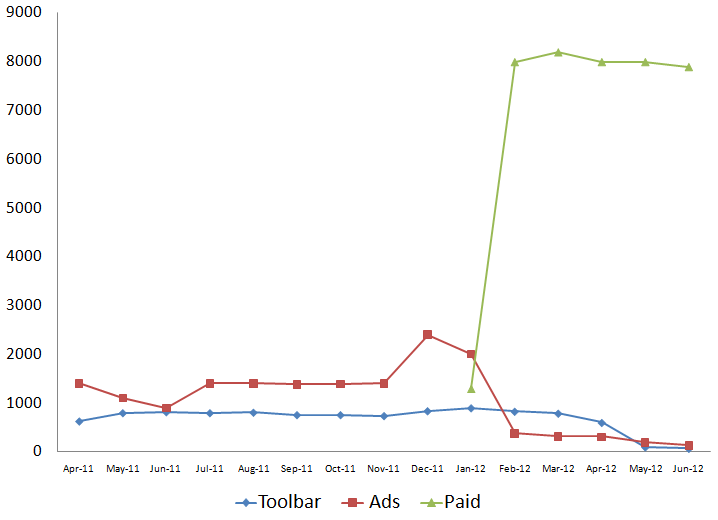
My original idea was to make money by attracting visitors to the website and using Google Ads. This isn’t generally done on software sites, but it kind of worked for me (I still had a day job though). Eventually it was making one or two thousand dollars per month. I experimented with toolbar installer offers – Bing for the US and UK, Ask for the rest of the world. The revenue wasn’t too bad, but the ads made more.

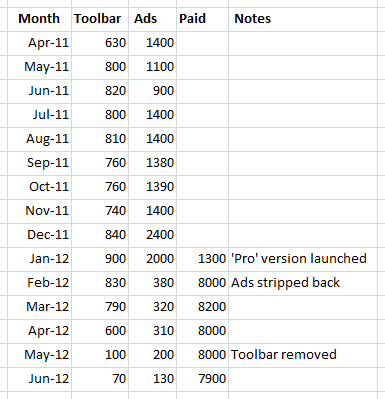
Eventually I decided to try selling a ‘Pro’ version of the software, with even more features. I planned to keep the free version as a ‘gateway’. Note the free version still has more features than non-free competitors. It took about 6 months to write (evenings and weekends), and was finally released (with no marketing, apart from the website) in Jan 2012.

As you can see, from the first full month the sales revenue brought in ten times what the toolbar did. I wound down the site ads, and eventually removed the toolbar (you can see the revenue tail off in the chart).

I quit the day job!

See also:

Selling software vs selling eyeballs

An experiment with Pinterest

Pinterest is the latest darling on the social media scene. Pinterest reportedly hit ten million monthly unique visitors faster than any other website. It is currently claimed to have some 15 million users. Basically it allows you assemble (‘pin’) images from anywhere on the web into themed folders (‘pinboards’). You can download browser plug-ins that allow you to pin an image from a website to one of your pinboards in a few clicks. The social element comes from ‘following’ other Pinterest users and commenting on and re-pinning their images. It is a simple idea slickly executed. The emphasis on images makes it rather different to Facebook, Twitter and other social media brands.
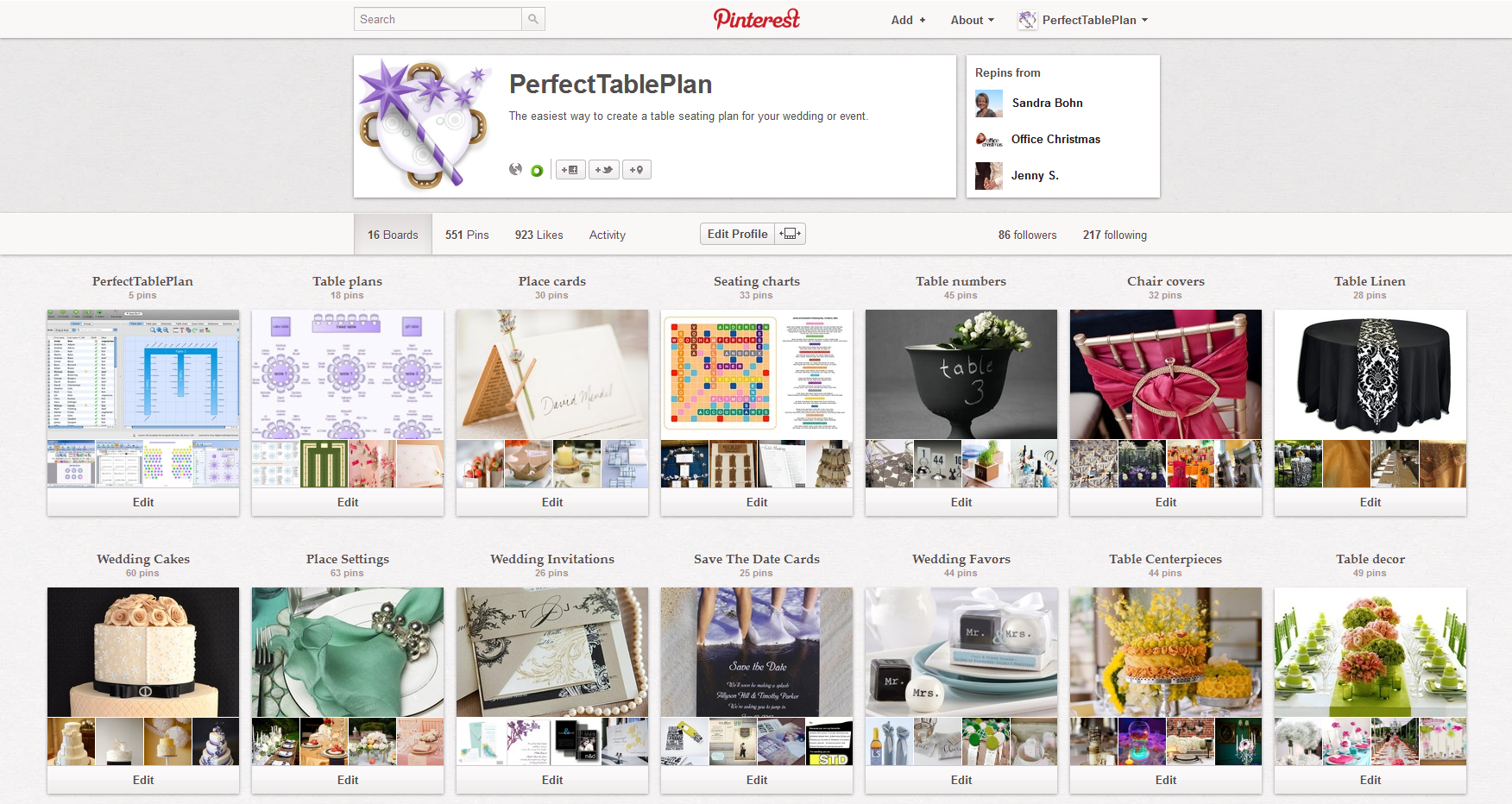

83% of US users of Pinterest are women and typical pinboard themes include:  fashion, funny images of cats, interior design, places to visit, food and wedding ideas. Check the Pinterest home page to see a sample of images currently being pinned. The interest in weddings is particularly relevant to me as I sell wedding seating planner software. So I started to create some wedding reception themed pinboards as an experiment. I quickly decided that scouring the web for pictures of pretty seating charts, place cards  and wedding cakes wasn’t a) a good use of my time b) the right thing for a 46 year old heterosexual man to be doing (GRRR!). So, using outsourcing site odesk.com, I found a nice lady in the Philippines to do it for me for a very reasonable hourly rate. She also (unsurprisingly) proved to have much better taste than me. I think she also really quite enjoyed herself! The resulting Pinterest pinboard is at http://pinterest.com/tableplan/.

Here is some data from my little experiment:

Cost: approx $50, plus a few hours of my time
Total ‘pins’ to date: 551
Clickthroughs to http://www.perfecttableplan.com/: 154
Avg time on site: 0:42
Bounce rate: 75%
Traceable sales (from analytics and cookie tracking): 0

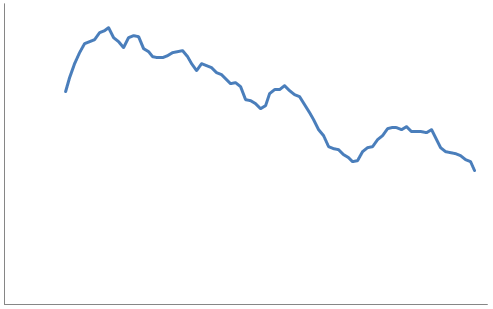
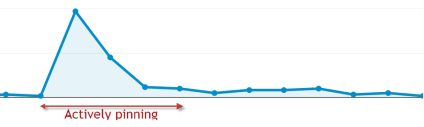
So that works out >$0.30 per click for not very targeted traffic (as shown by the bounce rate and avg time on site) and not a single sale. Not very encouraging. What’s worse, it only generated traffic while new pins were being added. As soon as new pins were no longer being added the clickthroughs fell off a cliff:

I may get some SEO benefit. But Pinterest isn’t looking a like a win for me. Also there are issues with Pinterest terms and general IP issues. Pinterest’s terms originally claimed that they could sell anything you pinned. They have since amended that to something more sensible. But pinning images you don’t own the copyright to is still problematic. I think most sites will be happy for people to pin their images, as long as they are correctly attributed – it is free advertising for them.  And it is obvious that most Pinterest users are happily pinning images without any thought about copyright. But it could conceivably get you into trouble for copyright infringement.

If you are a big name company with a big marketing budget, it may be worth putting some effort into Pinterest. Especially if you already have a big catalogue of images you own. But, based on my experiences, I think most small software companies can find better ways to spend their time.

Competition

Centurion tankA couple of years ago I got to drive a Centurian tank. 50 tons of clanking, smoke belching, killing machine. I can only imagine how terrifying it must be for an infantry man up against one of these heavily armed and armoured monsters. But, quite unexpectedly, I felt very vulnerable in the tank. My top lip was exactly level with a big spike of metal that formed part of the drivers hatch – if we had stopped suddenly I would probably have lost teeth. I could hardly move without bashing a knee or elbow on something hard. It was so noisy I could barely hear the shouting of the instructor, perched on the front of the tank only a few feet away. And, with my eyes only a few inches above the hatch, the visibility was poor. The tank was also very hard to drive, requiring an odd mix of finesse and brute strength. Just changing gear is quite an accomplishment for the inexperienced. I also got to sit inside some Russian tanks of more recent vintage and their ergonomics were even more nightmarish. Being inside one of these things on a battlefield, full of fuel and ammunition, a prime target for every enemy tank, aircraft and gun, must have been terrifying. It was a lesson that, what appears as invincible strength from the outside might feel very different from the inside.

  • Your competitor has more staff than you? That means that they have got to make more sales to turn a profit and they spend a lot more time in meetings.
  • Your competitor is better funded than you? That means they are spending more of their precious time and energy dealing with investors.
  • Your competitor’s product has more features than yours? Their product is probably more complex to use than yours.
  • Your competitor is using trendier technology than you? That probably also means they have a lot more third party bugs and issues to deal with.
  • Your competitor is based in a trendy location with better access to talent? That probably means they have to pay higher salaries and office rental and are more likely to get their staff poached.

Strength and weakness can be just two sides of the same coin.

I keep a vague eye on competition to my own table planning software. Over time I have built up a list of over 100 other products whose functionality competes directly with mine or overlaps significantly. New competitors appear fairly regularly. I notice that their website might look a bit more “web 2.0” than mine or their price is cheaper and my heart sinks a little. But, so far, it has never made a noticeable impact on my sales and I quickly forget about them. In fact my sales have gone up every year in the 7 years since I first released PerfectTablePlan. I just keep improving the product, marketing and support, day after day, year after year. While many of these competitors have since fallen by the wayside, with products and websites not updated for several years. Some of them are giving away their products free in the hope of making a few pennies from advertising. Some of them never even launched. Those that are still active are targeting rather different niches to my software.

Many companies respond to competition by trying to copy their competitors feature for feature. This is almost certainly a mistake. You will always be at least one step behind them. It is much better to listen to your customers and innovate. It is certainly a lot more interesting and rewarding. It is also much easier to market a product that is different[1].

There are cases where competitors can be a big problem, for example:

  • markets where there is a strong network effect (I wouldn’t want to compete head on with Ebay or Facebook)
  • markets where you might have to compete with the company that owns the platform (for example a Microsoft Office add-on isn’t likely to last long if Microsoft releases a new version of Office incorporating this feature)

So it is probably better to avoid these types of market, unless you are happy to accept that level of risk. But there are vast numbers of markets big enough to support multiple products. There are some 2 billion people with access to the Internet and they all have different requirements. Even a niche within a niche can provide a decent living for a small software business.

Competition can actually help you. The main competition for my table planning software is Excel and Post-It notes, not other table planning software. My competitors are helping to raise awareness of the fact that there is such a thing as software for table planning. Some of the people whose awareness they raise, are going to search for other software solutions and find and buy my software (thanks!).

So next time you find out about a new competitor, don’t panic. It is natural to focus on their strengths and your weaknesses, rather than your strengths and their weaknesses[2]. But they are probably doing the same, and they may be more afraid of you than you are of them.

In truth your biggest fear should be having no competition. If there is a no-one else doing what you are doing then either you are genius who has found an untapped market or the market doesn’t exist. Unfortunately, it is almost certainly the latter.

Further reading:

‘Choose your competition’ by Eric Sink

[1]This is why adverts for commodity products such as instant coffee and soap powders are so consistently awful.

[2] Microsoft should take note before they ruin a product with 90% of the highly lucrative desktop operating system market in their panic to compete with Apple in the tablet market.

Photo by Alistair Joseph.

A curated list of 200 articles for microISVs and startups

I have been steadily adding to the curated list of links on this site. Currently there are links to 200 articles, loosely categorized into topics such as ecommerce, market research, product naming, Pay Per Click and SEO. I have tried to select articles that contain ‘actionable’ information, rather than wafflely articles about ill-defined subjects such as time management and motivation. Some of the articles linked to were written by me, but the majority weren’t. I hope you find something useful. I would be surprised if you don’t.

Go to the links page

Promoting your software

This is a video of a “Promoting your software” talk I did at ESWC 2011. In it I discuss my experiences attempting to try every form of promotion known to man including: SEO, Google Adwords, magazine ads, affiliates, Facebook ads and hanging out in wedding forums using a female pseudonym. With real data! You can’t read the slide text in the video, but I have included the slides below.

A couple of people asked me afterwards whether anything I tried had worked. Yes! I wouldn’t have survived long as a microISV otherwise. But I didn’t really want to dwell on what had worked for me because it might not be relevant for different products with different price points in different markets. Also that isn’t the sort of information I want to give to my competitors.

Things were running a bit late due to problems with the projector, so I didn’t have time for the audience participation at the end. Projector problems are really not what you need when you are just about to do a talk to a room full of people! Many thanks to Alwin and Sytske of Collectorz for doing the video and to Dave and Aaron of Software Promotions for helping to sort out the unruly projector.