
 An AdWords account that starts off making a worthwhile profit for the owner is often neglected and, within a year or two, is losing money. Potentially a lot of money. I have seen it happen again and again. If you are running a Google AdWords campaign, you have to at least monitor it. Better still, actively maintain it. Otherwise the rot will soon set in.
Here is an example of an AdWords campaign that was professionally set up and then left to coast, unmanaged. You can see that the cost per converted click (blue) rose, while the number of conversions (orange) fell a little. The average cost per conversion (trial) rose by a factor of 3 in just 4 years. What was once a profitable account was now wasting a lot of money. Ouch.

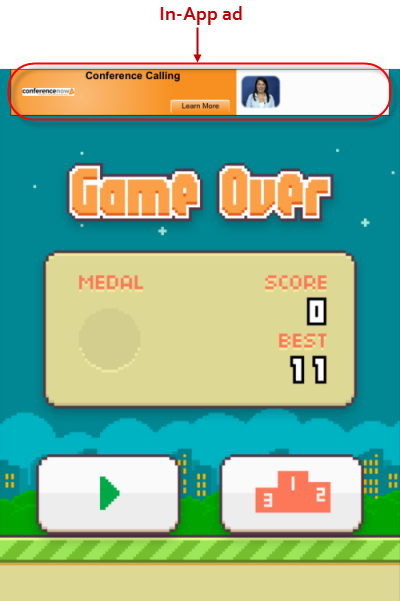
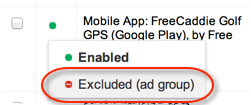
The main reason for the rot is that Google are continually changing AdWords, and they may opt you in to new features without asking you. For example they automatically opted display advertisers into showing ads in free-to-play AppStore games. B2B business owners were paying thousands of dollars for clicks made by bored children in Flappy Bird and the like. I have seen accounts where thousands of dollars have been spent on these worthless clicks. And these were small companies. Other reasons include:
- Your display ads might start showing on a new website where they convert badly.
- Poor targeting. Perhaps a new product, film or band has appeared with a name similar to your product.
- Increased competition and bid price inflation can reduce a healthy amount of traffic to a trickle, reducing profitability.
- Click fraud.
So you really need to keep an eye on your AdWords account. At an absolute minimum you should monitor the number of conversions and the cost per conversion and investigate any unfavourable changes. To keep your account in good shape over time you need to actively maintain it, e.g.:
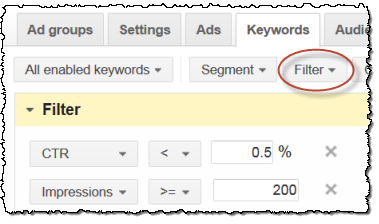
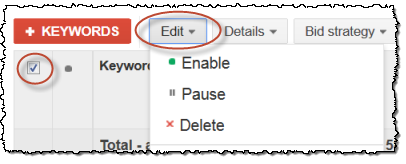
- Delete any keywords with poor click through rates (typically I delete keywords with a CTR of 0.5% or less after 200 or more impressions).
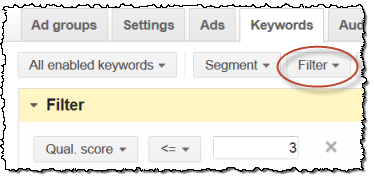
- Delete any keywords with poor quality scores (typically I delete keywords with a QS of 3 or less).
- Delete any keywords or ads with poor conversion rates.
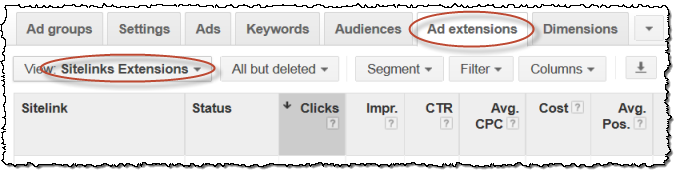
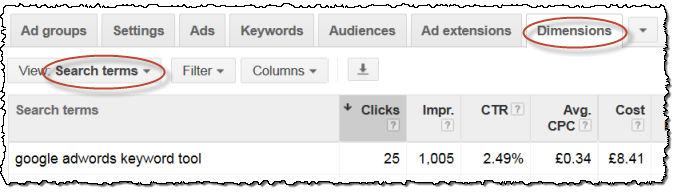
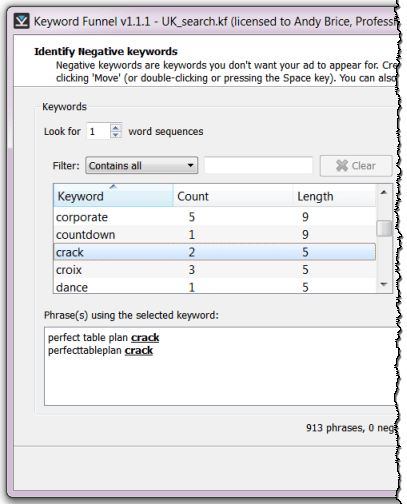
- Examine the dimensions>search terms report for negative keywords to add.
You can easily set up filters and get automated reports sent to you to make this fairly painless. These checks should be done perhaps once a week for a new or high budget campaign and perhaps once a month for a mature or low budget campaign. You can also make your life easier by setting up AdWords so that Google is doing most of the heavy lifting for you. For example you can use CPA bidding and you can set the ad rotation setting to Optimize for conversions: Show ads expected to provide more conversions.
A mature account that has been well set-up and has a budget of around $1k per month, probably only needs an hour a month to maintain. Alternatively, if you can’t spare an hour or two a month to manage your AdWords campaign, do yourself a favour and shut it down. Now.
 If you go to Amazon and browse watches, you will suddenly notice a preponderance of watch ads everywhere you go on the Internet. This is ‘remarketing’ (also known as ‘retargeting’ or, more colloquially, ‘cyber stalking’). Wikipedia defines it as:


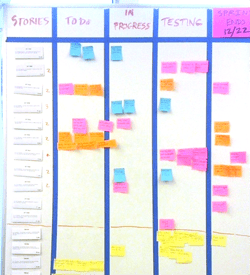 I have just launched a new product. First some back story. A few years ago, my wife and I were renovating the house we live in now. Trying to schedule and track all the different tasks, tradesmen and quotes was a real pain. We stuck Post-it® notes onto a whiteboard to try to keep on top of it all. The Post-it notes represented the various jobs that need doing. We placed them in columns (representing what stage they were at: needs quote, accepted quote, scheduled, doing, done) and rows (representing the various trades: plumbing, roofing, electrical etc). It worked, but it was far from ideal:

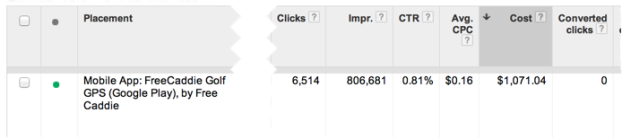 $1,071.04 spent on clicks from a single game app, that resulted in 0 trials of the software product being advertised. Hardly surprising given that it was a B2B app that cost around $1000. On further investigation this company was spending a substantial percentage of its AdWords budget on completely useless clicks from in-app ads. Ouch.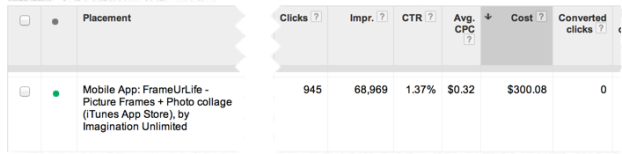



 “PC Pro magazine (not easy to impress) gave PerfectTablePlan a glowing review. That gives you some idea of Andy’s talent for programming and marketing. His weekend training program allows the attendees to garner his expertise for themselves and their software projects. Andy knows his subject – his experience is extensive, practical and hard-earned. I have run 2 successful small software business in the past. By attending his course I wanted to find out from someone who was actually doing it today, how I could apply techniques and best practice to my next software project. Did I succeed? Without a doubt. Andy was meticulous in his planning of the event and thorough in his presentation. I couldn’t ask for more. Top marks. I recommend Andy’s course to anyone venturing into the world of running a small software business.”
 “I recently attended Andy Brice’s “Start your own software business” course. Andy teaches some very practical skills to evaluate your idea, find if there is a market and launch your product. Behind most of the topics Andy had a story of how this particular lesson was learnt and how he has successfully implemented it. I now feel I am equipped with some practical knowledge of how to launch a software product. Thanks Andy.”
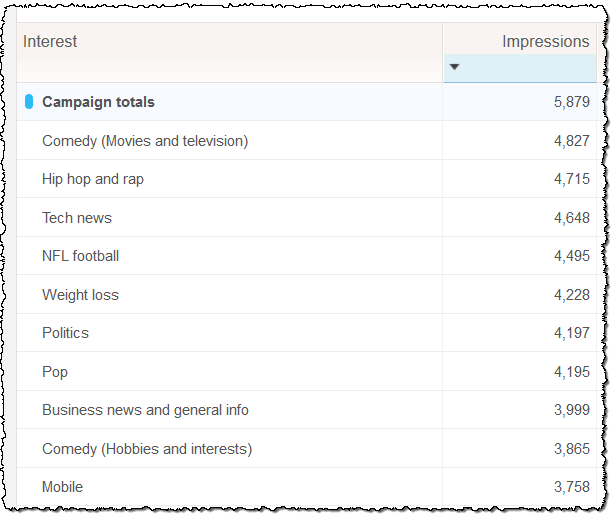
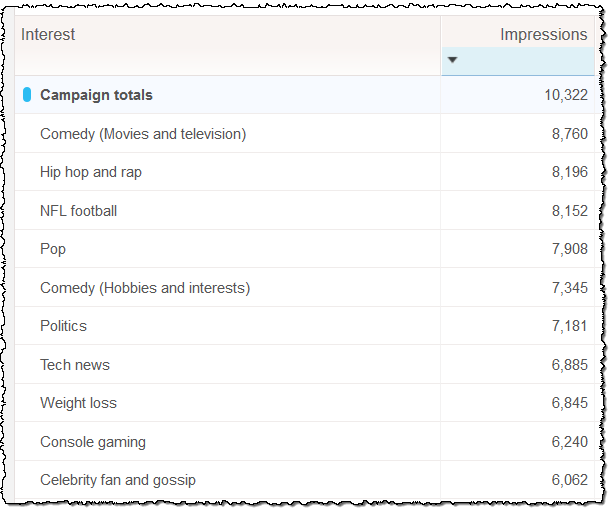
 I have been experimenting a bit with promoting my software using promoted tweets. You can target people based on their interests or the Twitter handles they follow. I have chosen the latter approach with the aim of getting people to a) click through to my website and b) retweet (in the hope of more click throughs).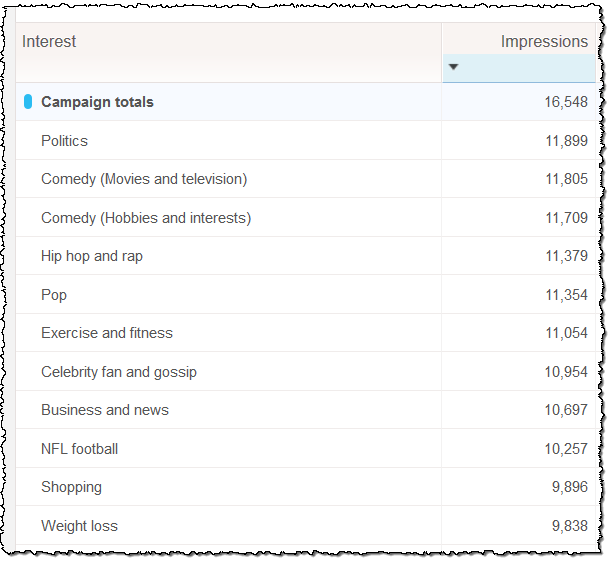

 I released my new product

 Successful Software